Chapter Text
but you people do not understand me, and i am afraid you never will.
— vincent van gogh
Though one’s attention may be inclined to draw towards the swaying of the carriage beneath Wednesday, her own was anything but.
The foliage customary to North Carolina tugged at the wheels of the aforementioned means of transportation ferrying her along a familiar dirt path. Deciduous woodland peered back at her with every glance she stole into its depths, ripe with the fruit of spring. Pollen flecked the leaves of the oaks, maples, and various other types of trees that shielded the carriage.
Beyond the bounds of its interior, Wednesday was able to detect the birdsong of some native species. She realized it was a thrush upon closer inspection. The shrill rising and falling of its song tapered off into a rolling pronunciation at every conclusion.
It was not the first time that Wednesday had traveled this road, and it certainly would not be the last. Tradition, the people of the Carolinas called it—an invitation that her family, as benevolent and kind their foolish hearts made them, were always much too eager to accept.
The laced boots she donned tapped against the floor of the carriage when she shifted in her seat and stole a glance at her family. Pugsley, her brother, was tucked into a smart sack suit at her side and admiring the scenery of the forest as if he had never seen it before. He had recently turned seventeen, and it had been with great pride that he had proclaimed himself to be a man now. Wednesday had arched a brow upon his words. It was difficult to reconcile her younger brother with the image of that of an adult’s—let alone the boy who still needed their mother to fix his collar.
Across the floor sat her mother and father. Morticia and Gomez Addams were never two to be apart for long. It was something that Wednesday had unfortunately come to realize in her nineteen years of living. Where one wandered, the other was quick to follow. Even now, tucked into the plush ebony seats of the carriage, their gazes were so tethered that Wednesday believed them to soon merge into one. If that were possible, however, she knew it would have happened long ago.
Turning away from the sickening display that her parents insisted on making their two children endure, Wednesday’s eyes befell the outside world once more. The forest was thinning now, warning her of their impending arrival. There was nothing that Wednesday could do to avoid such an occurrence, and so she leaned into the seat, narrowed her eyes, and occupied herself with counting the minutes.
When they drew closer, she was unable to miss it. Their destination avoided the attention of no one. The forest abruptly fell away past a gate, revealing the grandeur of the house from a distance, tucked away from the eyes of any nearby city in a haven of nature.
The carriage rolled to a stop, and the huffing of the four black horses pulling it along breached Wednesday’s perception. The door—which she sat closest to—opened nearly a minute later. A hand gloved by satin reached for her own, belonging to none other than their driver Lurch. A tall and unassuming man, he had been working for her family since before Wednesday was able to maintain memories of him.
Though it was not entirely necessary, Wednesday placed her hand in Lurch’s and allowed him to help her down the stairs. Her boots tapped onto the stone as she quickly relieved herself of the touch and lifted her chin to examine the sight sprawled before her.
Biltmore stood with all its regality, staring down into the manicured lawn—which beheld a fountain—and stone road boasting arriving guests. The pallor of the Indiana limestone house glistened beneath the sun as it poked its head from behind the clouds scattered within the ether, a compliment to its steeply-pitched roof of slate. The turrets and cornices clinging ever so desperately to the exterior of the house were unable to escape the scrutinizing eye of the sun. They, too, were cast in luminescence.
Even the gargoyles and other creatures carved of limestone, which Wednesday was partial to, were subjected to the sunlight. She had always believed them to look more intimidating beneath the overcast, or perhaps the evening—even nightfall, when the window lights reached high enough to grace them with a suggestion of exposure.
Wednesday had come to appreciate the Châteauesque style of Biltmore’s architecture across her many visits. Not only was it one of the only homes in America that prided itself on electricity, but it echoed an allure that not even she was able to harbor a foul taste for. She had always found it to be interesting—in the way of the moonlight spreading over the mountains or the pages of an old book that her fingers combed through—and so it was one of the only things she fancied during false pretenses and trivial conversation.
Her mother gasped behind her when she exited the carriage, voice carrying a lilt that might mislead whoever heard it into believing that she had never before seen Biltmore. When Wednesday looked over her shoulder, Morticia was pressing a hand into her chest and holding the opposite one to her father’s shoulder.
Wednesday chose to watch the carriage head in the direction of the stables instead of whatever sentimentality her family was intent on displaying this afternoon. She watched it until it disappeared from sight, taking with it their four horses—one of which was her own, Nero, who she often spent time with during the day while visiting Biltmore. She had always found the company of the stallion far more pleasant than anyone who tried to converse with her here.
The groomed footmen in their black-and-white attire who retrieved their luggage from the back of the carriage were waiting for instruction. Gomez addressed them with far more enthusiasm than they likely were used to, and it was then that the Addamses were led up the wide staircase and into the vestibule of the house.
Within it lay a flurry of activity. Various families were roaming, all dressed nicely in flowing gowns and suits; smiles of saccharine nature were exchanged between people hailing from various edges of the world; conversation overwhelmed the air as soon as Wednesday stepped foot inside. The ivory mosaic tile beneath her shoes held her steady as her family admired the stonework molding of the arches leading away from the vestibule. To the right of them, hints of greenery were visible through those limestone arches—a prominent feature of the Winter Garden.
Upon their entry, the head butler met them at the front doors and escorted them through the arches with a sweeping hand. The Winter Garden unfolded before Wednesday with the grace of a morning wrought by clouds: in a way that stole her attention, but was ultimately muted by the greyscale it bore. Luckily for both the cloudy sky and the Winter Garden, Wednesday was fond of dull colors—even if they were accompanied by many, many plants, just as she was witnessing now.
“Here you are, Mother,” she intoned as she drew to a stop, the words rolling from her tongue beneath the clamor. “Your favorite room of the house.”
“Oh, yes,” Morticia hummed at her side. A hand briefly coated the air behind Wednesday’s back. Though it did not land on the fabric of her dress, it stirred the places in which Morticia ghosted a touch. “The plants are so lovely. I spoke to one of the gardeners last year, did I tell you?”
Wednesday could hardly recall what had occurred during last year’s visit; she merely knew that her mother had a particular taste for plants. As much as she valued knowledge, she did not know much about them herself. There were only a few genus and species of plants that she could recite with ease. Her mother, however, could name some during the entirety of a walk through the Rambles.
Before a reply could flee her lips, Gomez sauntered over with a grin on his face. Whatever he said to her mother fell on no ears of Wednesday’s. She busied herself with examining the farthest reaches of the garden. An indoor jungle stationed just near the entrance of the house, it donned high stained glass windows upheld by wooden framework. The light of the sky, unburdened by the overcast that Wednesday so often appreciated, filtered through the glass and strung its tapestry upon the deep greenery that colored the plants. Palms and ferns alike dotted the interior and beckoned the gawking of the house’s visitors.
As guests divulged into pleasantries and Pugsley managed to uphold a conversation with a vaguely familiar boy his age, Wednesday took time to retreat from the masses and trail the edges of one of the pathways. Crowds had never been a forte of hers, and she did not long for them to be.
As beneficial as her parents said it was to be able to hold conversation—something that she could do and simply preferred not to—to garner information about who it was she spoke to, Wednesday abstained from doing so as often as possible at Biltmore. In her seven visits, she had never connected to any of the visitors. They were simply too much of everything: too loud, too insistent, too focused on elevating their status.
This year marked her eighth annual visit. The Vanderbilts always hosted guests during the spring season. While some only stayed for a few weeks, others found themselves relishing the luxury of Biltmore for longer, if not the entire season. Her family, to her misfortune, was one of them.
As Wednesday examined one of the lanterns hanging from the ceiling, she supposed that such a long stay did have its benefits. Biltmore was a sprawling place. When she was not insisted by other visitors to join dinners in the Banquet Hall or attend garden parties, she entertained herself with the quiet atmosphere the estate’s grounds provided. There was much land to traverse, and the confines of her room, too, proved to be a nice retreat.
Wednesday had quickly learned that Biltmore had many places to hide.
She found herself inwardly calculating the amount of time she would have to herself tomorrow—upon arrival, the Vanderbilts as well as the other guests were very incessant—in hopes that she could escape to the stables. Wednesday found solace in riding Nero through the fields, especially on days where the sky shed tears and wept its mourning onto lush grasses. It was a proper enough excuse to disappear, too.
Her pondering was interrupted when a butler approached her. With a neatly-shaven mustache and slicked hair, he offered her a bow, to which she offered nothing in response.
“Miss Wednesday Addams,” he greeted, his voice carrying the air of a Southern gentleman. “May I show you to your room?”
If she had been bestowed the mercy of being given the same room that she had habited the last two years, Wednesday was certain that she could find it on her own. But such was the nature of everything—this charade, the performances that each person within this house played. They were all pieces within the chess board of life; Wednesday merely decided to fall off the table at times.
She offered the man little more than a nod. It wasn’t her intention to be rude; he was simply doing his job, as unnecessary a job it may be. The man’s guiding hand beckoned her towards one of the limestone arches, where the Winter Garden gave way into the Main Hall and led to where she knew the Grand Staircase stood guard.
Wednesday glimpsed her family being ushered along much the same as she was. She followed in step with the butler guiding her, allowing the indoor garden to disappear into a hum at her back and become something of distant yet tangible memory.
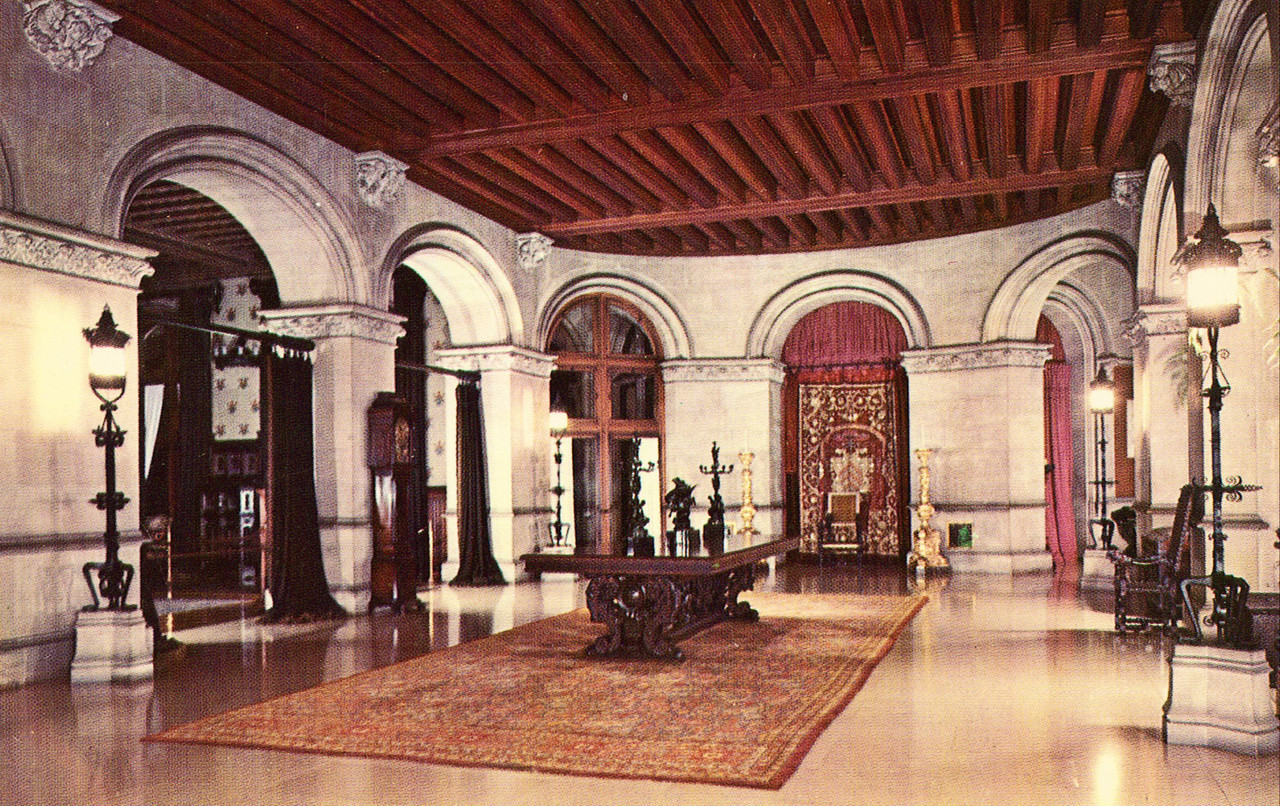
The Main Hall greeted her in furnished oak floorboards and velvety Baroque furniture. A long table rested in the middle, little more than a sentinel upholding the statues of iron sitting upon it. The long rug dipped beneath the pressure of her boots as she passed the polished table and headed for the looming staircase.
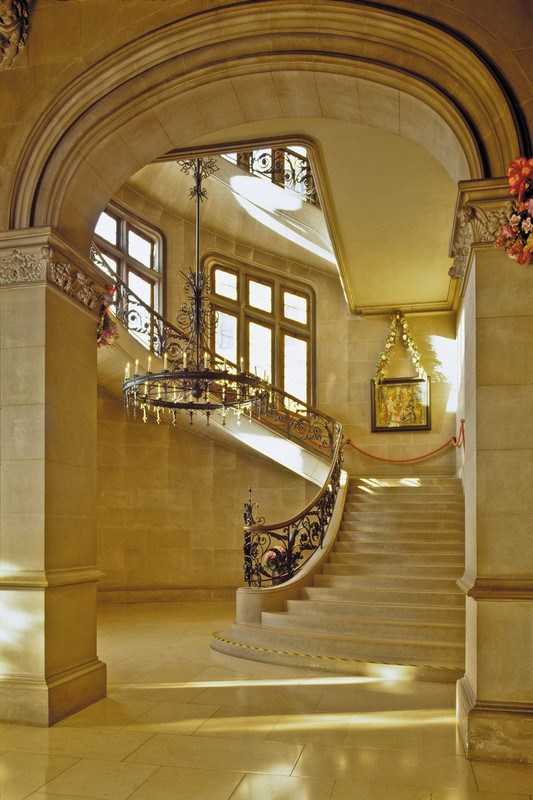
Spiraling in nature, it boasted limestone steps and iron railing depicting elaborate, foliage-like designs. The massive iron chandelier, in its dark nature, contrasted the paleness of the steps greatly as it stretched downward from the distant ceiling. It yielded a glow of golden unto the world it blinked down into. Wednesday abandoned the Main Hall in favor of starting up the staircase. The butler guided her all the way, perhaps unaware of how many times she had followed this very same path.
As she expected, they halted upon reaching the second floor. Wednesday knew well that the second and third floor were reserved for the guests of Biltmore Estate. The fourth floor, however, housed the many servants that lived within the house. She had ventured to it once or twice out of the sheer, untempered curiosity that a young adolescent bore the weight of.
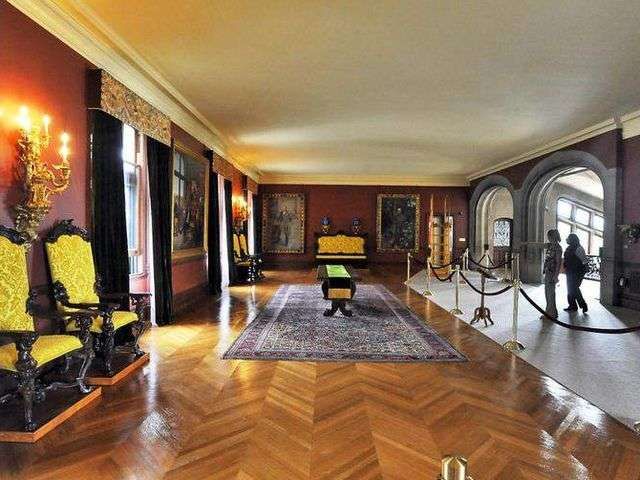
The Louis XVI room greeted them when they stepped into the living hall. Snug into the wall just beside the staircase, it was granted the adequate visuals one investigating a disappearance within the house may benefit from. When everyone was a suspect, Wednesday reasoned, there was no better place to live than one that saw everybody walk past.
“Follow me,” the butler said, guiding her down a hallway veering away from the living hall. Wednesday followed without a word of her own, steps carefully placed as they teased floorboards.
The butler searched his pocket for a keyring as they halted beside a familiar door: the Chippendale room. Though families tended to stay close, Wednesday had been permitted to stay in a room of her own during her annual visits after reaching the age of sixteen. The Chippendale room was one of the only rooms that she found to be close to her taste in upholstery—as well as atmosphere. One could not afford to be picky, she supposed, but it was a small mercy to be given.
On the third floor, her family was undoubtedly settling into the Hoppner and Walnut rooms. Wednesday imagined them now, the sentimental people they were—smiling upon entering and admiring the fixtures within the rooms as though they had never once laid eyes upon them.
“Is this a new painting?” one of them may say. “Isn’t it just beautiful?”
She would do no such thing herself, she thought as she watched the butler unlock the door and open it for her.
He pushed it inward and offered her a smile. “Please find yourself comfortable, Miss Addams. Your luggage will be delivered shortly. Is there anything I can fetch for you while you wait? A drink, perhaps?”
“That will not be necessary,” Wednesday replied, stepping past the butler and examining the interior of the room. She clenched her jaw in contemplation before ultimately adding: “Thank you.”
Perhaps sensing that she wished to be left alone, the butler shut the door behind her and abandoned her, much to her luck, to her own devices. She unfolded her hands from their taut position and allowed herself the liberty of exhaling. At once, the tension that had amassed on her shoulders fled to horizons belonging not to her but instead another unfortunate soul.
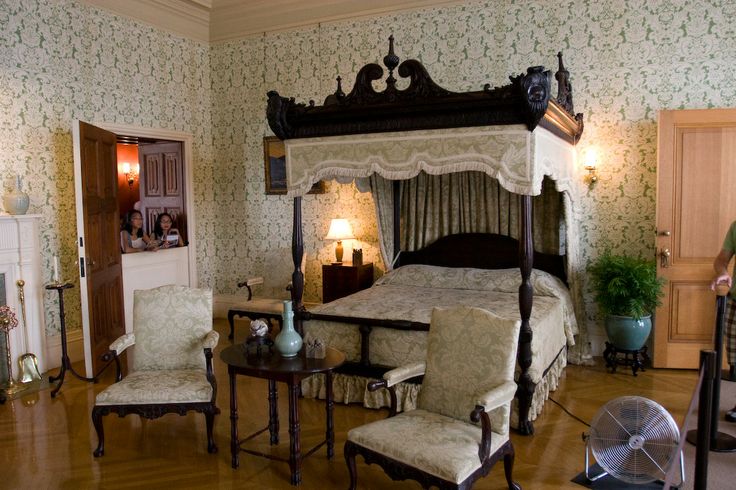
The Chippendale room was characterized by its mahogany furniture, many of which possessed curved cabriole legs and suggestions of carved leaves and shells. The velvet wallpaper enjoyed the appearance of tapestries; white-and-black designs wrapped around the entirety of the room and paused only to curtsy for the presence of the fireplace and window.
The tester bed and seating furniture stationed within the room welcomed Wednesday as though she were an old friend. In retrospect, it was possible she was. As soon as the thought breathed life into her mind, she chased it away. She was not foolish enough to assign thought to inanimate objects outside of writing. They were what they were—it was not Wednesday’s task to manipulate them into what they were not.
Not when she wasn’t seated before parchment and ink, that was.
Wednesday’s long braid fell down her back as she wandered over to the mahogany secretary desk near the wall. Many a night and day she had spent at it, pouring her mind unto paper and allowing its contents to stare back up at her beneath the luster of the natural light or the flickering of a candle’s. Though it was with her typewriter that she tended to entertain writing, there was something intrinsic about the strokes of ink upon paper that she respected.
It felt intimate—more personal, almost, which is precisely why her typewriter often spoke instead of her hand.
As eager as she was to escape into the world and flee the house before she could be forced into attending a social gathering in the living hall—there was already a dinner being held tonight to welcome the guests, and that was more chaos than she could handle on a good day—she wasn’t half-witted enough to believe such an escapade would be without its troubles.
Her assumption was proven to be correct when a knock on her door resounded. Opening it revealed the staff assigned to carry her luggage to her room. At their hands, bags were deposited along the far wall. Most noticeably carried in were her cello and typewriter case. She took the latter of the two from one of the butlers and placed it onto the desk herself. It was rare that she trusted anyone to handle a possession so dear to her.
When the staff departed the room, Wednesday’s eyes fell onto the clock placed atop the alabaster fireplace mantle. It was a quarter past one o’clock in the afternoon. There was adequate enough time for her to escape into one of the gardens while guests were assimilating into their rooms.
She rifled through one of her bags in search of the leather-bound journal and fountain pen she brought along. When she located them, she held them to her chest and set off for the door.
The hallway was empty when she stepped into it. Affixing her face into an expression, or lack thereof, she hoped would ward off anyone keen on exchanging pleasantries, Wednesday journeyed down the hall and back to the Grand Staircase. She passed the Louis XVI room once again as she circled to the first step, then the next, and the next. Her hand smoothed atop the banister briefly before she retracted it and clenched her jaw.
The first floor was as lively as it was when she departed it. Groups of people cascaded like waterfalls across the flooring and scattered like droplets—too condensed too maneuver through without taking their essence with her. Wednesday pinched her brows together and sidestepped them as best as she possibly could. Her skin, though snug beneath the fabric of her dress, prickled with the thought of brushing against a stranger.
As she entered the Main Hall, she reminded herself that people were strangers not in faces but in souls. There were many people here that she recognized, but she knew nothing of who they were—not their intricacies or their minds—and it made them suspicious to her. There was nothing she could do to rectify this; she did not intend on growing close with anyone, and so they would all remain suspicious in her mind, people to be inspected but never gauged wholly.
Wednesday sought out the lines of the plants within the Winter Garden just when something—or someone—knocked into her shoulder. Disgruntled and seared with discomfort, Wednesday shot a withering glare at whoever had bumped into her.
Whatever surprise stirring within her chest vanished completely to make room for annoyance.
“I am so sorry—” her perpetrator was saying as she turned around and clasped her hands before her. The words in her throat died off as soon as her eyes met Wednesday’s. Blue and brimming with sincere apology, they narrowed immediately. The poise of her presentation fell away just like the blonde of her hair cascaded against her face.
Enid Sinclair.
Wednesday would be so lucky as to run into her not an hour into her arrival. Any hopes she harbored of the Sinclairs not attending this year were dashed against the jaws of her transgressions.
She and Enid had met years ago as children. Much to their parents’ disappointment, however, they had never gotten along. The other children mingled and played and laughed, but her and Enid had never meshed together so well. There was something about Enid that greatly bothered Wednesday even then. Was it the way that she spoke, the mannerisms in which she carried, or was it the tact of her mind that Wednesday never expected to be so sharp? She told herself she had never given Enid enough attention to consider the reasoning behind her disdain.
She simply loathed Enid Sinclair, and Enid Sinclair loathed her. It was clear in the set of their glares as they stared at one another in tense silence and the echo of years past. This was how it was, and this was how it always would be. Who was Wednesday to disrupt a fate she had no interest in changing?
Enid’s face soured as a few more seconds passed. Her mouth opened and closed as though preparing a thinly veiled admonishment, but nothing escaped her except for the subtle whitening of her knuckles that Wednesday managed to take notice of.
“Enid,” Wednesday greeted at last. Her voice was neutral enough that any passing person would believe it to be genuine, but drawn enough that she knew Enid recognized that it held no warmth at all.
To no surprise of Wednesday’s, Enid did not return the reply. She had always been less eager to uphold her own face and dignify stiff conversation. Wednesday cared little for both of those; she simply enjoyed the indignation that befell Enid’s face upon being addressed by her.
A once-over revealed Enid’s attire: a soft pink gown befitted with layered ruffles and a draping decorative neckpiece. The oversized sleeves of it brushed against the ribboned waist as she kept her hands clasped together—tightly, without the ease one may encounter upon comfort.
Wednesday extended another particularly cutting glare towards Enid before turning on her heel and leaving her alone in the excitement of the Main Hall. The wide oak double doors awaited her eagerly. She swept through them unnoticed and tethered herself to the resonation of her shoes tapping against the steps leading to the entryway of the grand house.
Various carriages made abode in the esplanade out front. Wednesday avoided them and slipped past one of the two lions sitting on a pedestal outside. Made of Italian rose marble, she had always thought them to be the house’s protectors.
When she was younger, she had allowed her imagination to get the best of her and had written a poem about the lions—the way in which they guarded the house while it was haunted by night and chased away the predators of the Appalachian forests. There was no one more equipped for such a job than lions made of marble, she had thought.
Venturing to the left of the house tugged her in the direction of the gardens. Biltmore had many of them. Her mother was particularly fond of them; Wednesday appreciated, for the majority, the silence they offered. Shifting foliage snagging against one another and flowers tossing in the breeze were words greater than many people could speak.
Her journal and pen remained held to her chest as she descended the stairs leading into the Pergola, where wisteria embraced stone and draped tapestry-like violet from above. The plants crawling up the columns waved at her as she passed, beckoning her attention with every shred of energy their beings could muster.
It could be easy for someone to become lost in Biltmore’s extensive gardens. Wednesday never encountered such a qualm herself. She had spent hours in them throughout her visits—if she shut her eyes, she was certain that her feet could guide her along their paths without so much as an error. Sight could not take away what memory knew so well.
The shrub garden was her favorite. Leaning towards her palette, it was less bright flowers—unlike the azalea or rose gardens—and more shrubbery hanging along winding paths.
To her fortune, Wednesday passed no other soul along the way. No ladies with their husband or children playing games within the foliage deterred her from journeying deeper into the shrub garden and locating a secluded patch of grass. Sheltered beneath a tree, it was the perfect place to disappear to—to allow the greenery and the soil to replace all the intensity that the world boded.
As she settled against the tree and lowered her journal into her lap, she threw a cursory glance at the sky in hopes of finding it more condensed with clouds. There would be no better accomplice to her solitude than rain. If she was lucky, a thunderstorm would roll in and drench the air in the monochrome lens she was partial to.
But luck was not her ally today, and the ether remained devoid of a storm. She dropped her eyes back to the open pages of her journal and twisted her fountain pen between her fingers in contemplation. It was her soul, in some ways, this journal—and so too were the many other pieces of paper she had extricated the details from her mind to. It was imperative to her that she kept them hidden from wandering eyes.
Writing had an inherent vulnerability attributed to it. Everything she wrote was derived directly from her mind—and the heart, her mother would say, but she would disagree with a pinch of her lips. There was a weakness in the words that leapt from her pen. After all, they contained the secrets of her soul; it was seldom anyone got a glimpse of what they contained.
Wednesday took the time to comb through the pages of her journal for inspiration. Her mind drifted back to the lions at the front of the house and the poem that she wrote about them. Her fingers instinctively sought a page; she opened it, and out fell a folded piece of paper. She unfolded it and examined the words etched upon its surface.
Pearly fangs and a faux array of teeth—
Never to be real, that facade of a lion’s face
It was life they sought upon their pedestal of old
O, did they protect life only to taste it for themselves?Cold they were, bodies carved of marble
No heat thrummed beneath the skin of no saints;
Not a ruby of blood pebbled from the cracks
Eliciting rivulets down their manes“What have you echoed?”
Call them to those blessed with life
“What have you lived?”
Escaped past teeth made of stoneVying for life’s answers brought no life, they learned—
Nor did it grant them the answers they sought
Large cats of marble, they never learn to breathe
And they never cease to be cold
Wednesday furrowed her brows as she traced her finger down the edge of the paper. Evidently, the poem is not what she recalled it to be. It did not spin tales of protecting the house from creatures of evil—it dealt with the mournful reality of those marble lions never truly being real. It seemed that time did not grant Wednesday the answers she sought, either.
She shoved it back into the pages of her journal and began to write something anew—a tale of lions not grappling with identity but instead grinning with the shed blood of their adversaries.
What were they, Wednesday wondered, when stripped of their transgressions? What could they be if only they honored what they already were? She could hardly imagine the vast scale of benefits one would maintain without being alive. No bullet could graze flesh, and no blood could mar skin. Lifeless things were cold, perhaps, but that didn’t bother her. Wednesday was always cold.
Gradually, the shrub garden fell away from her. It was not a quick departure, but it was still a departure. When the sun drifted lower into the west, she gathered her pen and journal and began the painstaking journey back to the house.
As much as she was inclined not to attend dinner in the Banquet Hall tonight, her parents always enjoyed mingling with all walks of people—so, by extension, she joined them. It was less mingling for her as it was observation, but alas, she could not hide away forever.
Only most of the time, Wednesday thought with a wry twitch of her lips as she ascended the steps of the house and watched a butler swing one of the oak doors wide. She entered back into the vestibule and set towards the Grand Staircase with an assessing glance at her surroundings. Her father had taught her to stay alert.
“You may want to flee away from difficult things,” he had once said, pointing his finger at her, “but observation is one of a person’s best weapons. You can use it to protect yourself—or learn something about another.”
Wednesday had never sought out information about someone else simply because she wanted to know them. She didn’t want to know anyone. Any and all pieces of knowledge she garnered about an individual was scraped away only for the purpose of knowing something. There was no care, no sentiment, no hidden urge to unlock humanity’s secrets. It was clinical judgment—nothing more.
The living hall of the second floor was occupied by other guests when she passed it journeying from the staircase. Those within it shot her glances before delving back into the conversations she momentarily interrupted.
It was no secret, with their glittering faces and lack of dullness—in attire, at least—that people of high society found her family peculiar. Wednesday cared little about the opinions of others; she only thought it irksome that these people associated with her parents only for the family name they acquired. Perhaps they couldn’t see that, but Wednesday could: people did not like their family personally, but they did like their status.
Thus, it was not the first time her presence had tapered conversations to a halt, and it certainly would not be the last. Wednesday paid no mind to it as she reached the door to the Chippendale room and pushed it inward. When she walked inside and looked to the side, she realized that her bags had already been unpacked and tucked away neatly. She opened and closed her fists at the notion and shut the door behind her.
A walk to the closet revealed her clothes put away. Dresses strung onto hangers, night clothes, shoes—everything she had brought to wear was waiting for her addressing. Wednesday tapped her finger against the wall and chose a rather casual dress for the evening. It was not something she would wear to a party, no, but it was nice enough to wear for a dinner that she hoped would not last long but had attended a time too many to truly believe it wouldn’t.
Regardless of what she wore, she knew the event would be given no balm to placate its stiffness. It was this thought that ultimately made her lay the dress on the bed, place herself in the vanity chair, and begin redoing her hair. Though many ladies had a lady’s maid, Wednesday herself did not. The thought of someone else seeing her in such a vulnerable position, of doing her hair and wrapping it in their fingers, had always brought with it a deal of discomfort. So she had learned, with her mother’s help as a young girl, to tend to her appearance on her own.
And that is exactly what she did—braiding hair and dressing and adorning herself if only to dull the dread of the incoming evening, where the guests would speak and toast and eat and she would sit in the noise of it all.
She could only pray to whatever insipid force listening that Enid would not be seated anywhere remotely close to her in that time.