
Chapter Text
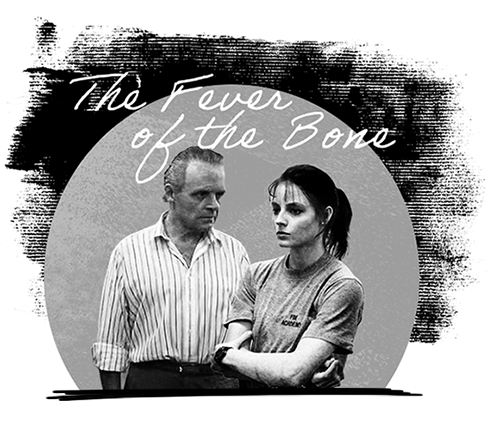
He knew the anguish of the marrow
The ague of the skeleton;
No contact possible to flesh
Allayed the fever of the bone.
-T.S. Eliot
The sky was a flat February gray, and the wind cut across the field. Clarice Starling knew only the taste of iron and the raw scrape of her breath as she dragged herself over the lip of the worst hill on the FBI’s training course. White puffs formed in the cold air with each sharp exhale, and at the top she let her weight settle on the flat, solid ground. “Son of a bitch,” she panted as a steady tremor ran through her arms - an aftershock of the climb. She chose to head left along the path that wove through the trees.
“Starling!”
The sound of her name landed like a hand on her shoulder. She came to an abrupt stop and dutifully turned to follow the authoritative voice. She recognized the tall, athletic man as an instructor and answered with a steady, “Yes, sir?”
“Crawford wants to see you in his office.”
“Yes, sir,” she repeated.
Clarice took off toward the campus. Soon, the ground beneath her feet softened to the grass that surrounded the building. She was acutely aware of the ring of perspiration soaking through the front of her gray sweatshirt, and the shine of it on her face and matting strands of hair to her forehead. But it was not every day Jack Crawford pulled a trainee off the course to meet in his office. She couldn’t spare time for vanity.
The men she encountered in the halls and on the elevator openly leered, undeterred by the sharp scent of exertion, the disheveled state of her ponytail, or the smear of dirt above her brow.
Once she breached the basement, the only other female she saw was someone’s secretary carrying a stack of paper to the Xerox machine; the Behavioral Sciences Unit was populated by men in suits or the red collared shirts that identified someone as an instructor or specialized staff.
She followed the signs and arrows to the open door to Jack Crawford’s office. The agent posted across from him helpfully told her, “He’ll be right back. You can go on in.”
Clarice stepped into the windowless room. Not even the Section Chief rated potted plants or a single touch of color to break the bureaucratic gray. She rotated slowly, taking in the filing cabinets and notes scrawled on a chalkboard. Someone had stacked two pillows and a folded blanket onto the arm of the sofa - one that would require a man of Crawford’s height to sleep at an awkward angle. Her eyes landed on a large bulletin board cluttered with newspaper clippings, official reports, and crime scene photos, all having to do with the Buffalo Bill case. It was unsettling to see the massive collection of information, from salacious headlines to disturbing close-ups of bodies bloated by water, all in one place. Arranged similarly to how the girls in Bozeman had kept a collage of their favorite heartthrobs and bands taped to the wall of their shared room.
“Starling. Clarice M. Good morning.”
She pivoted to face Crawford as he entered the room. He was thinner than her memory of him as a guest lecturer when she was an undergrad, and from the distant glimpses she caught of him around Quantico. His silver‑shot hair was neatly trimmed, his features sharp behind the clean lines of his glasses. The gray three‑piece suit only emphasized his stature, which suggested a man who was accustomed to being listened to, and for a moment she forgot herself. Her manners slipped.
“Morning, Mr. Crawford,” she said after a beat too long.
“Sorry to pull you off the course at such short notice. Your instructors tell me you're doing well.”
She smiled, and the flush she’d earned on the course flared to a deeper shade of pink. “I hope so. They haven't posted any grades yet.”
He sat behind his desk. “A job's come up and I thought about you. Not a job, really. More of an interesting errand. Sit down.”
“Yes, sir,” Clarice replied, shifting closer to the armchair pointed toward his desk.
“I remember you from my seminar at UVA. You grilled me pretty hard, as I recall, on the Bureau's civil rights record in the Hoover years. I gave you an A.”
She corrected him with, “A-minus, sir,” and immediately regretted it.
He gave a short, considering nod, filing the correction away with everything else he already knew about her. “Double major: psych and criminology. Graduated magna. Summer internships at the Reitzinger Clinic. It says when you graduate, you wanna work for me in Behavioural Science.”
“Yes, very much, sir. Very much.”
Without further comment on her future career, he asked, “You’ve heard of Dr. Hannibal Lecter?”
“The psychiatrist?”
“He practices out of his home in Baltimore. He’s helped us out in the past. Will Graham respected his opinions.”
Clarice noted the hint of resentment in the man’s voice, and the solemnity that always accompanied the name of the troubled former agent. The lore around Graham was that his inability to identify and capture The Chesapeake Ripper - an at-large killer who surgically mutilated his victims, removed organs to consume later, and displayed bodies in theatrical, artistic poses - had sent him into an emotional tailspin and early retirement from the Bureau.
Lately, even that infamous open case had been pushed to the margins. The Chesapeake Ripper’s horrors were being eclipsed by the frenzy surrounding Buffalo Bill, whose escalating timetable and taunting unpredictability had every available unit scrambling.
“We want Dr. Lecter’s help profiling Buffalo Bill. As you know, we’re all a little busy around here, and I thought this might be a learning opportunity for a student like you. Considering your previous education and future aspirations.”
“Yes, certainly. Thank you.”
“Don’t thank me yet.”
“Sir?”
“Dr. Lecter has a brilliant mind and a difficult temperament. He likes to help, but even more than that, he likes to be right.”
Her mouth tightened a fraction. If being right made him difficult, it also made him indispensable. The man’s expertise had to be the reason she was being sent to meet with him. “He’s expecting me?”
Crawford’s steady eye contact broke, briefly, as he told her, “He knows we’re sending someone.” He handed her a slip of paper with a Baltimore address written across the center. “And this is a copy of the case file,” he added, picking up a hefty sheaf of papers that she took from him with both hands. “I’d like a report on my desk by the end of day Wednesday.”
“Yes, Mr. Crawford.”
Clarice stepped out of the Pinto and felt the wet Baltimore cold immediately. It slid under her coat and claimed the space beneath her layers.
Dr. Lecter’s house rose from the quiet street like a relic from an older, more self‑assured city, with its steep gables and Tudor stonework darkened by the windows glowing against the gray afternoon. The landscape was meticulously kept. Rowhouses and bare sycamores lined the block behind her, but his home stood slightly apart. As she climbed the steps to the arched door, Clarice felt a subtle tightening in her chest. She rang the bell and waited. Waited. She raised her fist to knock when the door finally opened.
The man who appeared regarded her with a composed, curious expression and bright, blue eyes. He had a strong, slightly square jaw that gave his face a masculine silhouette. His hair was cut neatly and combed back from his forehead in a smooth sweep, and the gray was not uniform; there was a faint hint of the old, darker shade at the roots. The fine lines at the corners of his eyes seemed to be etched by thought rather than age. His poised posture drove Clarice to noticeably square her shoulders.
“Dr. Lecter, my name is Clarice Starling.”
“Jack Crawford sent you?”
“Yes, sir.”
“May I see your credentials?”
The question was reasonable, but she faltered a moment, patting her coat pockets before opening the front flap of her handbag. She removed the leather bi-fold and held it open for him.
He was momentarily distracted by the familiar scent of rich florals and woodsy, aromatic notes. L’Air du Temps. He wondered why she had not applied the perfume directly to her skin that morning; the puff of the fragrance from her purse told him it was typically a staple in her routine, along with a mild bar soap and floral-forward lotion. “May I?” he asked, reaching out.
She nodded.
Dr. Lecter took the identification from her, stepping back into the light of the foyer to read it. His eyes snapped up to her face with a quick precision that shook her. “Jack Crawford sent a trainee to me?”
The remark was mild, but the sting was not. “Yes, I’m a student,” Clarice replied. “I’m here to request your help and to learn from you.”
He considered her for a long moment. “I’m wrapping up a session with a patient. Please, come in, if you don’t mind waiting here.”
“Not at all.”
He held the door open wider for Clarice to step inside. She felt his eyes assessing her more fully, but it was different from the vulgar ogling of most men at Quantico or out on the street. He seemed to be cataloging details for further analysis, like the disparity between the quality of her shoes and purse more than the shape of her breasts under an ivory camisole that she suddenly worried was too sheer.
“Make yourself comfortable,” Dr. Lecter told her.
She observed a set of padded armchairs lined up beside a coat rack and claimed one for herself. The foyer smelled faintly of polished wood and something herbal. His home was immaculate but not sterile. She glanced around, observing Persian rugs, framed sketches, and shelves lined with books whose spines were worn. A cello suite played softly from deeper inside the house.
Several minutes ticked away on an ornate grandfather clock on the other side of the room before she heard footsteps. They were too chaotic for the man she had met moments ago, and she wasn’t surprised to see they belonged to the patient the doctor had referred to.
The man standing before her had a sloppy appearance, with long, unkempt hair, a patchy beard, and soiled clothes. He stared at Clarice for an uncomfortable moment before he abruptly moved closer. He shoved his hand down the front of his pants, stroking himself, and bent to her level as he hissed, “I can smell your cunt.”
“Mr. Miggs,” Dr. Lecter’s voice reached them before he appeared.
Miggs was driven to quickly bolt for the door, leaving before the doctor could scold him.
“I’m sorry, Miss Starling. I should not have let him leave ahead of me. He whispered something. Do you mind if I ask what he said to you?”
She stood from her seat. She swallowed against the lump in her throat. “He said, ‘I can smell your cunt.’”
Dr. Lecter’s tongue clicked against the back of his teeth in reproach. He had picked up the delicate tang in the air among the other fragrant notes drawn into the heat of her skin and clothes, but he was certain Miggs had only made the obscene claim to rattle the beautiful, young woman. “I would not have had that happen to you. Discourtesy is unspeakably ugly.”
She absolved him with an appreciative smile and nod.
“Let’s go to my office.”
He led her toward a room at the far left of the house where warm lamplight shined on brass and leather. A low fire burned in the hearth, its glow casting a gentle shimmer across the polished floor. His desk was near the window, but he gestured instead toward two chairs arranged for conversation on the other side of the room, separated by a coffee table.
“Please,” he said. “Sit.”
She did, but he remained standing for a moment, his attention unsettling.
“So,” he said at last, “Jack Crawford must be very busy indeed, recruiting help from the student body.”
Clarice kept her posture straight. “He said you would be able to offer insight into the Buffalo Bill case and, because I hope to join the BSU, he said it would be a good learning opportunity for me.”
“Did he?” Dr. Lecter’s mouth curved, but it was not quite a smile. “Did he also tell you why he refuses to come himself?”
She said, “No, sir.”
“Mmm.” He finally took the seat opposite her. “Jack Crawford dislikes being reminded of his failures.”
Clarice felt the shift of something brittle in the air. She didn’t need to know the details to understand that whatever lay between the two men was personal as much as professional.
Dr. Lecter tilted his head. “But you are not Jack Crawford. You have the look of someone who listens.”
“I try to, Doctor.”
“Good.” His gaze sharpened. “Tell me what you know of Buffalo Bill.”
She opened the folder on her lap.
He lifted a hand. “No. Not the file. You. What you know.”
Clarice hesitated only a second before speaking. She summarized the case as she understood it - victims, patterns, escalation. As she spoke, Dr. Lecter watched her with an intensity that felt almost physical; he was dissecting her as much as the case.
When she finished, he leaned back slightly. “And what do you think he wants, this man who skins women?”
She swallowed. “Control. Possession. Maybe both.”
Dr. Lecter’s eyes warmed, just a fraction. “You have a good mind, Miss Starling. Crawford was clever to send you. Though I suspect he did it for reasons other than your intellect.”
Color climbed from her chest to her cheeks, swift and unwelcome. “Sir?”
“He knows I dislike him. He hopes I will be… gentler with you.”
Clarice wasn’t sure that was true. She also wasn’t sure it mattered.
Dr. Lecter leaned forward, elbows on his knees, hands steepled. “Very well. I will help you. Not for Crawford’s sake.”
Her breath caught at the implication.
He smiled then. “But understand this, Miss Starling. If you want my insight, you must be willing to give something in return.”
Her posture stiffened.
He let the silence widen between them, watching the instinctive bracing, the way she read the moment as a trap any other predator might set. “Insight is a dialogue, not a monologue. If you want my help, you must be willing to let me understand you in return.” Dr. Lecter’s voice dropped, almost intimate. “Do you think you can do that?”
Clarice held his gaze. She wasn’t quite sure what he meant, but she replied, “Yes, sir. I can.”
He sat back, satisfied. They come to me for monsters, he thought, watching the fledgling profiler. She seeks to understand a killer, never suspecting the most accomplished one sits across from her. “Good.” He could taste the tension of wondering if her mind would ever be refined enough to see the truth in him. “Then let us begin.”
Dr. Lecter leaned back in his chair with a quiet satisfaction. Clarice passed him the case file, and he received it with a small nod, as though she’d handed him something fragile rather than a folder thick with photocopies and autopsy reports. He opened it on his knee. The pages made a soft, papery whisper as he began to read.
He didn’t skim. That was the first thing she noticed. His eyes moved steadily, absorbing each line. His suit was impeccably tailored. The knot of his tie was perfect. His shoes had a quiet shine. Nothing about him looked rushed or improvised. His cologne was a subtle but unmistakable note that faintly touched the air around him. Something clean, sharp, and old‑world. It was not the heavy, musky aftershaves most men his age favored. It was a barbershop note smoothed down to its essence of citrus oil, a trace of lavender, and something darker underneath - vetiver, maybe, or oakmoss.
“Tell me,” he said, still reading, “what drew your attention first?”
She answered carefully, keeping her voice even. He listened without interrupting, his gaze flicking up only once, as if to confirm that she was speaking from her own reasoning and not reciting Jack Crawford’s.
When she finished, he turned another page. “And what did you feel when you saw the photographs?”
The question caught her off guard. She hesitated, then gave him the truth. “The images were disturbing. But then I felt… motivated.”
He nodded once, as though that was the answer he’d expected. He asked two more questions, each one angled not at the case but at her - how she prioritized information, what she dismissed, what she found difficult to articulate. He was mapping her mind.
A soft chime sounded from the hallway. He closed the file with a quiet, decisive motion.
“I’m expecting another patient,” he said, rising.
She stood as well.
He tucked the file under his arm. “We will need more time. I’ll read over this more carefully tonight. We can regroup tomorrow evening, if you’re free?”
“Yes, sir,” she said.
He gave her a small, courteous smile. “Good. Insight is best when it’s fresh.” He gestured for her to step out of the room ahead of him. “Shall we say six o’clock? We can continue to use my office.”
“That sounds good.”
He stepped ahead of Clarice to open the door, making room for his patient to enter without directly crossing paths with her.
Before she walked away, she felt Dr. Lecter’s attention linger on her for a single, thoughtful beat. An acknowledgment that their conversation had only just begun, and that he was already looking forward to the next one.
She was, too.
Dr. Lecter’s last patient of the day droned on about her mother’s meddling. He wrote the occasional note on the pad of paper on his lap, but he found himself sketching Clarice Starling’s profile with the fine, exacting tip of his pen, the rich, black ink smooth as lacquer. Whenever she had turned her head, the lines flowed smoothly from temple to chin, as if sculpted with a careful hand. Her skin had the muted glow of someone who spent time indoors and outdoors in equal measure, and he was already thinking about which paint colors would blend to perfectly capture the tone and texture. Porcelain Doll, a touch of Titanium White, and the faintest tint of Cameo Pink to add a flush to her cheeks.
He could still smell her. The remnants of her perfume and the intimate musk he’d never forget, but her ambition, too. Crisp. Ripe. She had handed him a neatly tabbed, annotated case file. She made a valiant attempt to hide her nervousness, only making it more apparent every time her hand smoothed her skirt. She self-corrected, immediately refining a response to be meticulous. She was clearly hungry for Jack Crawford’s approval, and Dr. Lecter could not deny that it excited him to think how the doe-eyed trainee might shape herself to win his esteem.
Crawford had sent her expecting… what? That Dr. Lecter would be insulted? That he would see only a trainee with a regional accent and a secondhand coat?
Crawford, for all his experience, had always been a little tone‑deaf in that regard.
Clarice Starling’s coat had been inexpensive, yes, but clean and well‑kept. Her second-rate shoes were polished. She had dressed to be taken seriously, and for most people, the effort would have been convincing.
And her accent. Pure West Virginia. That was the most revealing of all. Not the broad, unguarded Appalachian vowels of someone resigned to her origins, but the carefully managed residue of them. The consonants tightened, the softness held in check. The accent of a woman who had trained herself to speak past her beginnings. Someone who wanted to be understood, not exposed. Someone who knew where she came from and intended to go somewhere else entirely. He found that admirable. Attractive, even.
Not only in the crude way Crawford might have assumed. Attraction, for Dr. Lecter, was a matter of mind first. Clarice Starling seemed to have a mind that moved cleanly, directly, without ornament. She thought in straight lines, but not dull ones. And beneath her professionalism, he had glimpsed something bright and hungry.
Hunger was always interesting.
Crawford had meant to send an errand girl. Instead, he had sent someone with potential. Someone who might, in time, be worthy of the truth. He would never willingly offer it up, but she may have possessed the rare, terrifying acumen to unearth it herself. She was a student capable of outgrowing her lessons - someone capable, perhaps, of realizing that the insight she sought from him came not from study or theory, but from the practiced hand of the Chesapeake Ripper himself.
Will Graham had once seemed a proper opponent - bright, intuitive - but he had collapsed under the strain of his own inadequacy. A toy that broke too easily.
Should Clarice’s sharp mind ever turn its full focus upon him, should her hunger lead her to a truth she was unready to keep, it would be a simple matter to discard her. A pity, certainly, but his liberty outweighed his curiosity. He could always destroy what he had built.
If Crawford had sent anyone else, Dr. Lecter would have provided a mostly inaccurate profile; he had no intention of offering genuine help to the Bureau or any individual agent who lacked the discernment to interest him, and he benefited personally from law enforcement’s preoccupation with another killer. Clarice Starling was the sole exception - unexpected, disarming, and the only reason he chose to engage at all.
The faintest smile touched Dr. Lecter’s lips. He already suspected the silhouette of the man she hunted - an ex‑lover of a former patient of his, a troubled soul he had treated only at the periphery, but long enough to recognize the pathology that would eventually bloom into monstrosity. He would not let her find that name just yet. Not until she earned it. Not until she understood what it meant to look directly at such a creature.
In the meantime, he would consider the proper way to thank Jack Crawford for the unexpected gift. Clarice Starling. Bright. Hungry. Gathering force. A mind worth cultivating.
Yes. He would enjoy watching her emerge into a formidable adversary. Perhaps even an equal, if she remained intact.
“So, what was he like?” Ardelia posed the question before she was fully inside the dorm room she shared with Clarice. The door clicked shut softly behind her. “I bet he was intense. He seems intense.”
Clarice pressed her thumb into the crease of the Behavioral Science & Ethics manual, marking her place. Her roommate’s exposure to Dr. Hannibal Lecter was reduced to photographs accompanying newspaper articles and one or two quick glimpses of him on television addressing reporters on courthouse steps. “We didn’t have much time,” she responded. “I’m going back tomorrow.”
Aredlia lifted her eyebrows in a pointed little tease.
“He was kind of… unusual.”
“In what way?” Ardelia asked, nudging each shoe off, letting them fall wherever they landed.
Clarice shrugged. “I get the impression he never takes a break from being a psychiatrist.”
Ardelia’s face twisted. “He was trying to analyze you.”
“He sees a lot.” She paused, thinking. “And there’s tension between him and Crawford.”
“Oh?”
Clarice felt the regret hit immediately. She hadn’t meant to sound like she was trading gossip. “It’s that thing men do. Pretending it’s professional when it’s really pride.”
Ardelia traded her blue, collared shirt for an oversized tee that hung low off one shoulder. She bounced into a seated position on her bed, moving on. She studied the chipped red polish on her fingernails. “How long after graduation do I have to wait before I ask Johnny Brigham to take me out for a drink?”
The firearms instructor and ex-marine was only a few years their senior. He was the topic of quite a few conversations among the small population of female trainees. A heartthrob among the mostly middle-aged men who guided them through tactical exercises and the science of forensics.
“Unless you want to take him for a spin?”
Clarice shook her head, scolding her friend more than responding to the question.
“I forgot,” Ardelia said, “you like them older and grayer.”
Clarice reached her free hand into an open bag of Jolly Rancher candies beside her on the bed. She launched one across the room, and Ardelia ducked sideways to avoid it.
“I’m not making fun of you. I’m stating a fact. I don’t blame you, girl. Stability is sexy.” She picked the candy up from where it had landed. She looked pleased to see it was cherry-flavored. The wrapper crackled as she peeled it open. She popped the red piece into her mouth, her words garbled as she spoke around it. “There’s no shame in wanting someone who’s already grown up.”
Stability. It wasn’t the right word for Dr. Lecter, Clarice decided. Stability belonged to men who were merely dependable, men who had plateaued. He seemed like… something else. A man who had finished growing in all the ways that mattered and then kept going, refining himself past the point where most people stopped.
And yet there had been moments when he’d said something that caught at her. An observation that seemed to come from a colder altitude than she was used to. A question with sharp corners. With anyone else it might have read as arrogance or rudeness. With him it felt as though he were speaking from a vantage point she couldn’t yet see. She found herself replaying those moments, not to reassure herself. More to understand why they hadn’t repelled her. If anything, they’d made her more alert, more curious. He was accomplished and attractive. He carried something she couldn’t name but couldn’t ignore either.
The vacant rowhouse had no door, only a sheet of warped plywood leaning inward. Dr. Lecter stepped over it without disturbing the debris on the floor. The air inside was cold, tinged with mildew and the sour stench of human habitation.
Miggs was in the back room, crouched beside a rusted mattress spring, muttering to himself. He did not hear Dr. Lecter at first. Few people ever did.
“Mr. Miggs,” Dr. Lecter said softly.
Miggs jerked upright, eyes wide, pupils blown. “Doc-? How’d you-”
“I was concerned,” Dr. Lecter replied, as if this were a routine welfare check and not a descent into the underbelly of Baltimore. “You missed your appointment.”
Miggs blinked, confused, then wary. His appointment had been earlier that day. He’d been there, in the doctor’s house. He saw a pretty lady. He was certain of it. But he said, “I’m real sorry… Never thought you’d come here.”
“No,” the doctor agreed. “You didn’t.” He stepped closer, careful not to touch the walls. The floor creaked under Miggs’s shifting weight, but not under Dr. Lecter’s. He observed the man’s posture, the tremor in his hands, the faint odor of unwashed skin layered over cheap alcohol. “I heard what you said to my guest this morning.” His tone was mild, almost conversational. “It was inappropriate. And rude.”
Miggs swallowed. “She-she was p-p-p-retty. I didn’t mean-”
Dr. Lecter tilted his head. “Intent is irrelevant. Behavior is what concerns me.”
Miggs backed up until he hit the wall. “Doc, I- I-” His breath hitched. “I- I won’t do it again.”
“No,” Dr. Lecter said. “You won’t.” He didn’t raise his voice. He didn’t move quickly. He simply stepped into Miggs’s space, close enough that Miggs could smell the expensive fragrance that did not belong in his ruin. “You will not speak to her again. You will not approach her. You will not think of her in the manner you did. Do you understand?”
Miggs nodded rapidly.
“Good.” Dr. Lecter stepped back, smoothing an invisible wrinkle from his sleeve. “I prefer to resolve these matters without escalation.” He paused, studying his patient with a cool, appraising detachment. “You needn’t fear me, Mr. Miggs,” he said softly. “You are not suitable material. Not for my work. Not for anything of value.”
Miggs blinked, confused, then stricken.
Dr. Lecter continued, voice almost kind. “But you know that, don’t you? You’ve always known. That there is nothing in you worth saving. Nothing worth remembering.”
Miggs’s face crumpled.
Dr. Lecter gave a small, polite nod, as if concluding a consultation. “Take care of yourself.” He turned and left the way he came, while behind him, Miggs sagged against the wall, trembling with a despair that felt suddenly, crushingly inevitable.
Dr. Lecter did not look back. He did not need to. Men like Miggs always finished the work themselves.