Chapter Text
In an uncharted expanse in the depths of the forest, a massive ginkgo tree had, over time, showered down torrents’ worth of its perpetually autumnal leaves like scales shed from an ancient beast even older than Adam himself. These leaves had proved a potent fertilizer to the surrounding flora, and all around, golden offshoots staked the ginkgo’s claim on the territory. Now, for the first time, they would provide nourishment for fauna as well.
For the past day, Adam had tilled the soil with his antlers to make a flowerbed of sorts. He took great care in pulling up a section of the root network with his teeth, making sure not to break any of these precious veins that would deliver the forest’s lifeblood to its new inhabitant. The branches of the trees would have raked at the hide of any other being that had somehow grown as tall as Adam, but they yielded to him and let him work in peace. Even the sinking of the sun couldn’t deter him; he just continued by the light of his halo, for he was known to the deerfolk and humans alike as the creature who held the moon between his antlers. After he’d dug a pit that he deemed wide and deep enough, there was nothing left to do but wait.
A few days later, the ground about the ginkgos trembled and leaves were disturbed from their resting place when Adam’s antlers, his first shed in a long time and leadlike in their weight, hit the forest floor. He took a few moments to survey the area and make sure that the impact hadn’t damaged any of the trees, then he nudged the antlers into the pit with the still tender crown of his head. Their elegant prongs contrasted with the tangled, gnarled roots in which they nested. Adam covered this sylvan still life with several bales’ worth of ginkgo leaves before he returned the soil back to the earth from whence it came. Another bed of leaves was spread over the top for good measure, and then he finally allowed himself to rest atop it. The carpeting of foliage around the pit had been completely razed, and bald, brown earth was exposed to the gentle sunlight.
It was here that Adam served as sentinel during the coming months. The earth he’d laid bare slowly acquired new leaf layers like a wound growing back its skin, and he lay still all the while, the occasional twitching of his ears and eyes the only sign of life. He remained stalwart against the wind and rain, when soaked leaves trembled down off their branches to adhere to his mud-flecked coat. Neither could lightning move him when it struck and felled a neighboring tree one night. The trunk crashed down with an amplified version of the one Adam’s own antlers had produced not too long ago.
Only on the final week did Adam begin to move again, and even then, it was only to pace in circles around the perimeter of the pit. His snowy hide, glistening with dew and rain, made a ghost out of him in the nighttime.
His antlers had already begun to grow back in when he finally peeked back into the pit where his old ones lay, and under the layers of faded forest tissue something was stirring. Rustling movements beneath the camouflage revealed a nose here, an eye there. Adam leapt into the pit, which was barely big enough to contain him, and he began to push aside the soil to uncover the new life that he’d been protecting all these lonely months. It didn’t take long until a black fawn was winding its way around his legs, its dusky coat and the skin beneath having grown around the skeletal frame of Adam’s antlers.
Adam helped to push the fawn out of the pit with his head, and after that, his first priority was to guide it to the nearest body of water large enough to reflect the entire moon. The fawn lapped up the diluted holy water, and when it had gotten used to the taste, Adam tilted his head to pour out pure moonlight from his halo for the fawn to drink. Then, in no time at all, he was trotting back out from seclusion with his first angel, Sachiel, in tow.
Much was made of Sachiel’s arrival. The deerfolk left the fawn offerings of enchanted fruit to fortify him, and they anointed the crown of his head with magical poultices to help his antlers grow strong that he might protect them in turn. Adam imparted to him from day one the importance of this duty, and as he was introducing Sachiel to the subjects and domain that would be his, he brought Sachiel to a copse full of towering trees, all covered in arrows. The arrowheads were rusted over in varying degrees, a mark of the time they’d been there exposed to the elements. Beneath all the rust, though, the first coat with which they’d been painted was blood from all the times that Adam had been shot protecting the forest. One day, he explained, Sachiel would choose his own spot of the forest and collect his own trophies as proof of his devotion to the deerfolk. So take care of your antlers, Adam told him, because they are both your crown and the weapon by which you serve.
Sachiel’s antlers grew like weeds, and the rest of him was soon to follow. Like Adam, it took much longer for his to shed than the average deer’s, though unlike Adam, his couldn’t create any new beings. After some experimentation, however, they found that his sheds did have a special property: any weapons created from them never missed the target. Sachiel cycled through antlers, providing plenty of arms for the deerfolk to defend themselves over the years, and he still continued to grow. He finally measured about half as tall as his father, which was still enough to put him head and shoulders above the rest.
Then one day, Sachiel noticed that Adam was carrying his head low, like his antlers were yoking his neck to the ground. He’d also begun to rub the side of his head against the ground and against tree trunks in irritation like he was trying to knead away a headache. Watching this, Sachiel knew, in the marrow of his bones that had been made from Adam, that soon there was going to be another one of him. He told Adam through their familial bond that he would take good care of the forest while Adam was away, and Adam disappeared not long afterward.
The following months were uneventful, if a little lonely. Ordinary deerfolk, with their spoken language and the humanlike forms that they would occasionally assume, would always be alien to him. But he dutifully warded off predators, animal and, for the first time, human. On a warm afternoon he’d heard the wail of one of his subjects pierce the air, so far away that he was the only one who could detect it. At the scene, he found one of the deerfolk with an arrow in his flank and whose distress was such that he was unable to assume his humanoid form, which might have discouraged the encroaching poachers. But when the humans beheld Sachiel and gazed into his lightless eyes, they beheld him with the same fear with which people had for years only beheld Adam on the rare nights that he could be glimpsed. They’d fled, but one had retained his faculties long enough to shoot another arrow into Sachiel’s side.
Sachiel returned to the depths of the forest carrying the wounded boy across his large shoulders. The arrow was still embedded in his side, and his antlers were still bloody. After Sachiel deposited the boy someplace where he would be looked after, he made his way to a secluded spot where he licked the wound around the arrow, waiting for Adam.
Adam returned the next morning with Sachiel’s first sibling, Shamshel, following at his heels. When Adam gave Shamshel the lesson about their duty as members of the forest’s nobility, he punctuated the lesson by taking all three of them to the copse of arrows. He selected a set of trees apart from his own and marked it as Sachiel’s. Then he stabbed Sachiel’s first trophy into the bark of one of them, where the wound, in recognition, bled sap the same dark color as their blood.
This routine became the norm for Adam and his children. Every few decades, it would come time for him to disappear again, and then he would come back with a new sibling for Sachiel and the others to raise alongside him. Generations of deerfolk would be born and die within their lifetimes, but the only change in their family was that there were more of them as the years progressed. The arrow-pocked section of the forest expanded like its very own collective tree trunk, gaining more and more rings expanding out from its center with age. Every time one of the angels made their first kill in service of the forest, they were officially welcomed into the family, though it was understood between all of them that they were not to go out in search of confrontation; the call had to come to them naturally. Some of them were more eager than others. Sandalphon in particular had been an especially late bloomer in this regard; Adam had practically needed to push him out of the nest.
All of the angels had the same dark coloring, with the exception of piebald Israfel. Like Adam, none of them had been seen in human form. It had been widely rumored for a long time that perhaps Adam didn’t even have one, because he was from a time before the deerfolk had acquired such forms. Whatever the reason, the one thing that was clear about the entire situation was that Adam wasn’t about to reveal any of his secrets. Nobody, including his children, was to know where he hid his human form, and neither were they to know why, after so many lifetimes of solitude, he’d only relatively recently begun to create the angels. Perhaps Adam had sensed something changing in the air, and some ethereal component of the atmosphere reacted with something inside his body, transmitting the message that the forest would soon be in need of more guardians.
His instincts proved right when, after producing fourteen angels in total, he was finally brought low pushing his children out of a bullet’s path. Behind him lay a wake of trees whose spines he had snapped in his haste to reach them. It was a level of destruction he’d never before committed, and his body was soon to endure destruction of the same effect. The bullets lodged too far inside him and crushed too many bones with their blunt force for him to recover. When he fell to the earth and he could feel his earthly form beginning to leave him, he took one last look at the angels flocking to his side. Sandalphon and Sahaquiel both lay with him, immobilized in the mire that formed when his blood spilled onto the soil, bleeding from multiple wounds in their sides. Israfel had been struggling to get away but ultimately had been too weak, and she’d hid herself behind her father’s massive body, quivering. Ramiel, Zeruel, and Sachiel were the only ones in sight who were still hale and standing. The other angels had either fled or were stranded in other, disparate parts of the forest.
When the bullet wounds in Adam’s lungs forced his last breath out and he finally expired, the last thing he did was swear that the humans would never touch his children. That day was the first and only time that anybody witnessed anything close to a human form emerging from his body. His magic flowed upward into the sky, and consolidated into a giant figure made of light as it escaped its earthly prison. The giant looked down upon his children and the humans surrounding them, but none of them could return his gaze because the rest of him was too blinding. He illuminated the dark forest so that it was as bright as daytime, like the midnight sun in winter at the northernmost corners of the earth.
Then the light went out again, leaving everybody blinded, but this time in darkness. When Adam left, he took the moon with him. Whatever mysterious valences had held his form together hadn’t been strong enough to last, and the dissolution of his body blanketed the entire forest in mist. The dampness rendered the majority of the humans’ matchlock rifles useless.
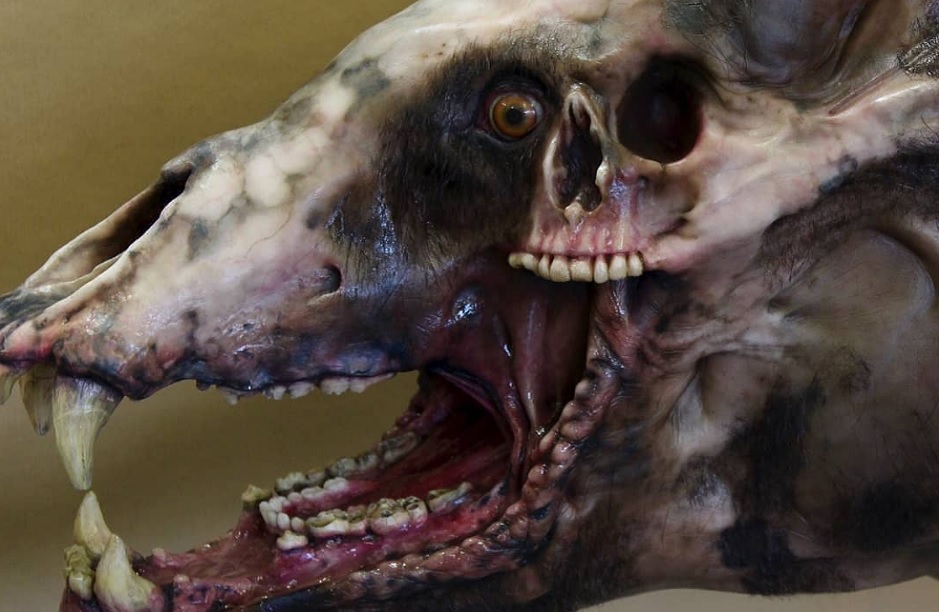
Gendo Ikari heard the crashing sound of Sachiel’s body falling over onto its side as if overcome by a sudden onslaught of disease. He headed toward the source of the noise, and his rifle was still dry enough to take one more shot before it too would be put out. However, when he shot, the sound of the bullet’s impact was that of metal meeting the anvil. Something flickered like sheet lightning in front of Sachiel’s body when the bullet made contact. Sachiel began to get to his feet, and Gendo, whose eyes had just started to accustom themselves to the darkness once more, could barely see through the mist the gleam of Sachiel’s new, sharp teeth. He ran, so he wasn’t able to witness the emergence of a new skull growing like a tumor, parasitically conjoined, from the side of Sachiel’s neck.
All throughout the forest, Adam’s magic was affecting the other angels as its tide swept over them, poisoned with the hatred Adam had felt before he died. One by one, the sounds of the angels falling like columns could be heard before their monstrous forms began to manifest. Israfel experienced the same second face pushing out from beneath her skin like Sachiel’s, but hers continued to sprout into a second head, complete with a brainstem of its own. Leliel’s skin peeled away, leaving only the absence of light in the shape of a deer standing where her body had been. Near the sea, Gaghiel, Sandalphon, and Shamshel threw themselves into the water, whereupon their bodies merged into a hydra mass, and that was only the beginning.
It rained for days and days following Adam’s death. Entire areas of the forest flooded, and fish could be seen swimming above ground in the ankle-deep water. Their scales flashed in what little light there was. The angels had intended to burn his body atop a pyre made of his trophies, but that was no longer possible in this deluge. Instead, Sachiel and a few of his other large siblings hauled Adam’s body across their oxen backs to the plot of earth from which they had all emerged, promising that he was not to touch the ground until they lowered him into his burial spot. The rest of the angels followed behind in their wake, and even Gaghiel, Sandalphon, and Shamshel heaved their combined body out of the water to slither their way into the cavalcade. Already their hooves had flattened into webbed, clawed feet, and the heavy rain washed away their fur in patches to reveal scales scabbing over the exposed skin. Ramiel and a few others remained behind, putting up their new shields to deter any other forest creatures from intruding on this sacred procession. They stood, unmoving, in the rain, like Adam had done for them while he had waited for them to be born so many years ago.
As it currently was, the pit was too small to lay Adam in, so the angels who weren’t serving as pallbearers began to bow their heads and churn up the earth. Their necks ached as they pushed away sodden soil and clay, and the clay coated their antlers, which weighted them down further. Finally, after much drudgery, Sachiel and the other pallbearers were able to reverently lower Adam’s body into the ground. They made sure that there was plenty of room for his antlers to nestle. Then, with the flood having washed away the golden leaves that had been their swaddling, they had no choice but to cover his body back up with the clay, hoping all the while that the earth could be considered blessed enough for him. They tried to ensure that the dirt wasn’t packed too tightly, so that if anything grew from his body, it wouldn’t drown in the earth. Then they all lay down around Adam’s grave in a protective circle.
After seven days, the rain finally lifted. The angels decided that it was time they returned to their everyday duties of protecting the deerfolk, because now they would need to help rebuild and find new homes for everyone after the flood. One, they decided, ought to remain by Adam’s side at all times to ward off scavengers. They selected Sahaquiel for the job, because after her transformation, her body was overlaid with hundreds of blinking eyes that enabled her to see in any direction and forgo the need for sleep. She kept a portion of her eyes pointed at the grave at all times to check for signs of life. Days passed, then weeks, then months, and nothing shifted the burial mound. Every so often, she would descend into the pit to stir up the soil with her antlers, just to make sure that nothing was suffocating inside. To both her relief and disappointment, nothing ever was. After a year, Sahaquiel began to grow weary of the heartache, and she called upon Sachiel to replace her.
As his first child, Sachiel felt such a strong connection to Adam that even before his sharp deer senses picked up on the thing burrowing its way out of the grave, he could sense the change in his marrow and antlers. This feeling he knew to be Adam; the humming inside him and the static in the air were unmistakably his. Before he approached the pit, he snapped his head back and forth, searching every corner of the area to see if any of them might be harboring an impostor. The spell broke, though, when he heard a crying sound that was certainly coming from within the pit.
He peered over the ledge, and in the brief time that he and Sahaquiel hadn’t been looking, a small white fawn with identical coloring to Adam had broken its way through its earthen shell to the surface. Half of Adam's skeleton was also visible now, and the bones were somehow so white and clean that they looked sun-bleached. The fawn roaming among the bones was much, much smaller than any of Adam’s other children had been, and when it spotted Sachiel, it began crying louder for his attention. Sachiel realized then the cause of the crying; because the fawn was so small, it couldn’t climb out of the pit by itself. It would run up against the side and try to jump only to slide back down, and on its white fur a light dusting of dirt had accumulated.
Sachiel jumped into the pit, very careful not to crush the new life that it had borne. The fawn, upon catching Sachiel’s scent, seemed overjoyed with recognition that this was his sibling, and it wound itself around and around Sachiel’s legs in happiness. It barely came up to his fetlock. Sachiel tried to communicate with it, but found that the bond he shared with his siblings was absent between him and this new, mysterious creature. The fawn only continued to look at him with its large, trusting eyes, and it didn’t seem fazed in the slightest. Sachiel supposed that since it had never known such a connection, there was nothing for it to grieve in that sense.
For the first time in his long life, Sachiel willed his body to take on a form that approximated a human’s. This way, he would still have to mind his antlers, but the bulk of his body would not be an issue. He was still much larger than any ordinary human, and the closest approximation of skin that he could create was tree bark, and all four of his eyes remained hollow as ever, but this didn’t change the fawn’s eagerness to meet him in the slightest. Sachiel ducked so that his antlers wouldn’t tangle with Adam’s ribcage as he reached down to pick up the new baby. He gathered it up in his spindly, shadowy limbs, and he tilted his head to pour out some rare moonlight into his cupped palm for the fawn to drink. Then, cradling the fawn, he slowly lowered himself down to sit with his new sibling in his arms, basking in the short time that it would know him as its only protector.
Holding the fawn like this, Sachiel was able to inspect it more closely. With the hand he wasn’t using to support it, he began to brush the caked-on dirt off of its coat with a single finger, revealing an almost imperceptible pattern of petal-pink spots upon the fawn's back. The spots matched the sclera of its eyes, which were a miniature version of Adam’s. Sachiel saw much of these as well as its comparably pink nose, because the fawn kept turning its head up to look at him and press little wet nose kisses to its new sibling, duckling tail wagging all the while. It made itself comfortable in Sachiel’s lap, content to be stroked and wordlessly adored, laying in the cool, damp earth beneath the striped shadows of its progenitor’s ribs. Sachiel, who was as unpracticed in spoken language as he was in transformation, made alien cooing noses at the fawn that sounded faintly like the warbling of doves.
After the sun had gone through one cycle of setting and rising again, Sachiel woke the fawn and placed him aside so that he could return to his deer form. The fawn had already grown stronger from the moonlight, ready to stand on its own for longer periods of time. It seemed antsy to set out for the wider world. Sachiel lowered his neck so that the fawn could climb into the protective basket of his antlers, and then he slowly raised his head again to let it loose upon the forest. It ran to and fro, rejoicing in the sun-dappled ground, so much more appealing and welcoming than the harsh prison of his father’s skeleton. Sachiel tried to communicate with it once more for good measure, but it seemed that the fawn hadn’t matured enough for that yet.
It wasn’t long before the fawn collapsed onto the forest floor from both the exertion and the excitement, but its eyes were still bright and hungry for more life. Sachiel knelt down to allow it to climb across his shoulders, and when he rose he took great pains not to jostle his precious cargo. Then he set off at a slow pace, so smooth that the fawn nearly fell asleep atop its perch from the gentle rhythm of Sachiel’s shoulders shifting like a rocking crib. Sachiel knew his siblings must be getting worried, but he waited to turn his connection to them back on, because he didn’t want to spoil the impact of the good news by transmitting any images of the fawn to his family. He carried the child into the daylight himself, and then finally bade the rest of the angels to come see their new brother.
It’s because he’s made from Adam’s organs, Ireul conveyed to Sachiel one day when they had finally introduced the fawn, whom they’d named Tabris, to his aquatic siblings. The triple heads of Sandalphon, Gaghiel, and Shamshel jutted out of the sea, marking the stretch of shallow water where Tabris was learning to swim, paddling happily from one head to the next. When he would approach one, that head would sink a little below the surface, forming a little island where Tabris could take breaks.
Shortly before their visit, Ireul had used her special talent for absorbing herself into the terrain to investigate the root network around Adam’s burial site. The day that Sachiel had brought Tabris home, one of the things that had puzzled all of them was the fact that Adam’s skeleton — including his antlers — had remained completely unaltered and pristine. Ireul went to get a feel for the soil, and there was a residual tang of blood that the nearby roots had soaked up and stored inside. The very faintest concentration of it had run up into the trees’ veins and all the way into their leaves as they fed off his body. That soil, Ireul concluded, must have mixed with Adam’s organs while they decomposed, until the mixture coalesced like a pearl to form the fawn before them.
That’s why he can’t talk to us through our bond, she said. He’s fundamentally made from a different part of Adam. Might also be why he’s not as sturdy. He’s softer.
Then, thought Sachiel, Tabris wasn’t just another angel. He was made of Adam’s heart, and his lungs. The anger stored in Adam’s vented spleen as he died had all gone out into the air, so that’s why Tabris didn’t seem as angry as the rest of them. In him were all of the wonderful, vulnerable parts that had allowed Adam to create the way he did out of the love he’d had for the natural world, and the pride he took in his followers, and his desire to protect them at all costs. There was some satisfaction to that. Those parts of him hadn’t gone to waste after all.
I don’t think we’re going to get another angel, said Ireul. I think all the magic left in Adam’s body went into making him.
So be it, thought Sachiel.
The head that was Gaghiel’s swanned over on its long neck to bring Tabris back to shore. Tabris shook off the water, making a little mist as he did so, and then he preoccupied himself for a while getting irritated at the sand that clumped in his fur. He tried to push it off with his nose, but just ended up sneezing.
We have to do something about the communication problem, said Ireul. She melted into the sand and re-emerged at Tabris’s side to nuzzle him. What are you thinking about? Sachiel could hear her saying to him, a little mournfully. What’s going on in that mind of yours? How are we supposed to tell you that you have all these siblings who love you until the end of the world?
As if he had understood her on some unspoken level that ran even deeper than the usual angelic mental connection, Tabris’s body answered her wishes. He sneezed again, and transformed into a human.
There was no getting around the fact that the angels would have to share Tabris with the rest of the deerfolk someday, but now there was the added chagrin that he’d have to be in regular contact with at least a few of them so that he could learn language. The angels guarded Tabris jealously during his welcoming ceremony, surrounding him in circular formation, kneeling down, and locking antlers to form a protective cage around him. Tabris didn’t like the feeling of being locked in again, and even his siblings could tell by his behavior that he was starting to get irritated with them. Reluctantly, they let him go to mingle with his adoring subjects, but their bond twinged every time somebody else touched him, or was even so bold as to lift him into their arms (even if Tabris did invite them to do it), or accept his pink-nosed kisses.
They waited with bated breath for the moment Tabris would finally reveal to the rest of the deerfolk his new shape, and the fanfare when he did made them a little uncomfortable. When the deerfolk anointed and christened him with their poultices, oils, and more than the usual offerings (for he was, after all, Adam resurrected rather than just one of his offspring), their fingers lingered a little too long on Tabris’s smooth human forehead for the angels’ liking. It was only with great pain that they finally admitted through their spokesperson Armisael (after greedily hoarding Tabris back into their fold) that because of this unforeseen development, Tabris would be needing lessons in human speech. There was much clamor when they announced this, with many people scrambling over one another to offer their services. The angels coldly declared that they would not be making the decision tonight, nor would they make it in public, nor would anybody else be privy to the decision-making process. Then they whisked Tabris away again, though Tabris brayed in protest as they did so. In the end, they chose one of their higher-ranking priestesses, since the clergy were all highly educated. Tabris learned the languages and dialects of the surrounding regions, and their formal language through written scripture and texts from the outside while he grew up. The angels were thrilled to find that he actually could understand the things they told him through their bond; he’d just been locked inside his incompatible body, unable to respond.
His antlers came in slowly, like wisdom teeth. One of the first things he ever said to his siblings using his human tongue was a complaint about how his head hurt from the pressure. This prompted an entirely new wave of anxieties about how Tabris was still being a late bloomer, and maybe his antlers were growing so slowly because they were too big for his head and couldn’t get out, and was his head going to be able to withstand it? But they grew in healthy, and he was so proud of them that he kept them manifested, even in the human form in which, in his siblings’ opinion, he’d gotten a little too comfortable.
After fifteen years, Tabris shed his first pair of antlers. His siblings celebrated, and they talked to him about all the things they could carve on his new antlers for his coronation when they came in. On that birthday, they also bore him off to the copse where all their trophies were, including Adam’s, and they explained to him the arrows’ significance in low voices.
This is the next rite of passage, they said. We all had to do it; you will have to do it too, someday. Then you will be truly inducted into this family.
“Oh,” said Tabris. “I hope it will not be anytime soon.”
It may not be, they said. You will live for a very long time. But no matter what happens, even if it should be tomorrow, you had best prepare your heart and mind from this moment onward.
Miles away, in a village not too far from the forest’s border, Gendo Ikari’s son received his first firearm.